In order to design scalable, research-backed solutions against which impact could be tracked, we needed tools and capabilities that go beyond research.
What is needed is diverse teams comprising deep experts and fresh eyes. Here the toolkits offered by “design thinking” — ethnographic research, brainstorming within diverse teams, an emphasis on reframing problems, iterative, rapid prototyping via experimentation and feedback are extremely useful.
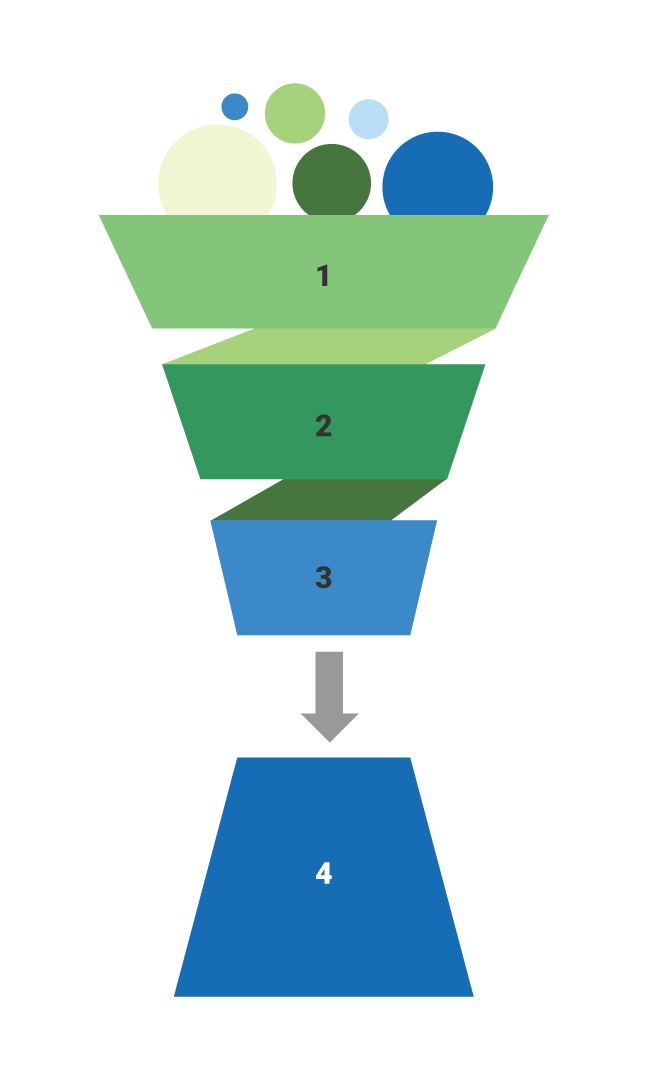
At CSEI, we have adapted these tools. Our process includes Problem Definition, Ideation, Co-creation and Scaling.
Research institutions see a research paper as the endpoint of their work. Whereas changemakers are looking for science-backed solutions to implement. We build communities of early adoptors to design and scale science-Backed solutions for complex social and evironmental challenges.

Mobilise funding
for groups

Co-create, prototype
and test new solutions

Establish shared
measurement practices

Build the
community

Identify and convene
the stakeholder groups

Guide vision
and strategy

Identify successful
solutions
Over the last two years, we have learned some valuable lessons on the role CSEI could play. We decided that our role would be that of an ‘impact ecosystem builder’ who enables changemakers. We will not be an actor, implementing solutions ourselves but a platform that brings together stakeholders for impact.
We have developed a three-step process of ideation, co-creation and scaling to surface problems, ideate, co-create and prototype solutions and finally implement at scale
Identifies communities and problems, guide collective vision and stratergy
Review existing solutions, identify gaps and research-backed solutions
Partner with changemakers, co-create and prototype solutions, stakeholder validation, document feedback
Mobilise group funding, build communities to scale solutions, track and communicate impact