The invasion by Lantana camara, hereafter lantana, in Indian forests is a critical environmental challenge (Goyal and Sharma, 2015).
Lantana has invaded 15.5 million hectares (Mha) of the surveyed area of 20 MHa and is likely to take over 30 MHa of forests, which amounts to 44% of forestland in India (Mungi et al., 2020).(This particular study focused only on India’s forests and not other types of ecosystems such as grasslands, open forests and agricultural lands). T
he Global Invasive Species Information Network and the International Union for Conservation of Nature (IUCN) consider lantana to be one of the world’s most invasive alien species (Global Invasive Species Database, 2022; Lowe et al., 2000). With its potential to adapt to the changing climate, lantana is threatening critical ecosystems and biodiversity across India.
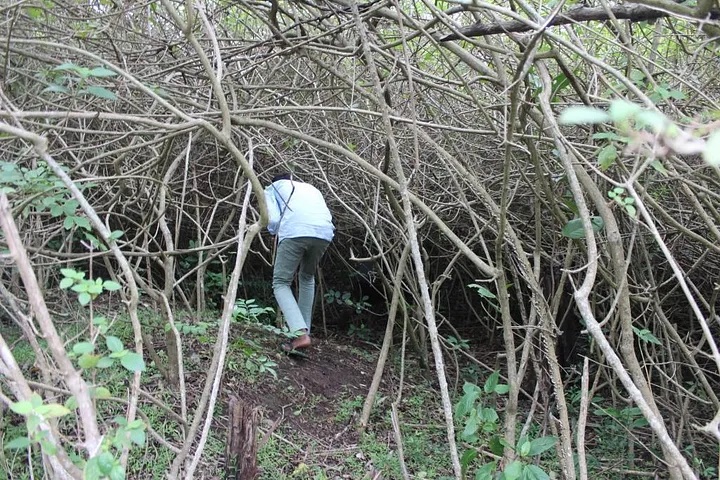
Most scientists agree that the lantana invasion impacts biodiversity and human well-being (IPBES 2019). In global biodiversity hotspots, such as the Western Ghats, lantana continues to displace native plant species, altering forest structure and homogenising forest composition. By supplanting species which produce non-timber forest products (NTFP), lantana affects a significant source of income for forest-dependent communities (Hiremath et al., 2017; Kent and Dorward, 2015). Lantana thickets hamper movement through the forest and have increased human-wildlife conflict (Wilson et al., 2013; Prasad, 2008) and impacted vegetation composition (Singh et al., 2014).

About the author





Related
Research agenda: Tackling the Lantana camara problem at scale
To understand multiple perspectives around lantana removal and ecological restoration, CSEI-ATREE and the Biodiversity Collaborative sat down with key stakeholders in July 2022.
Join our mailing list